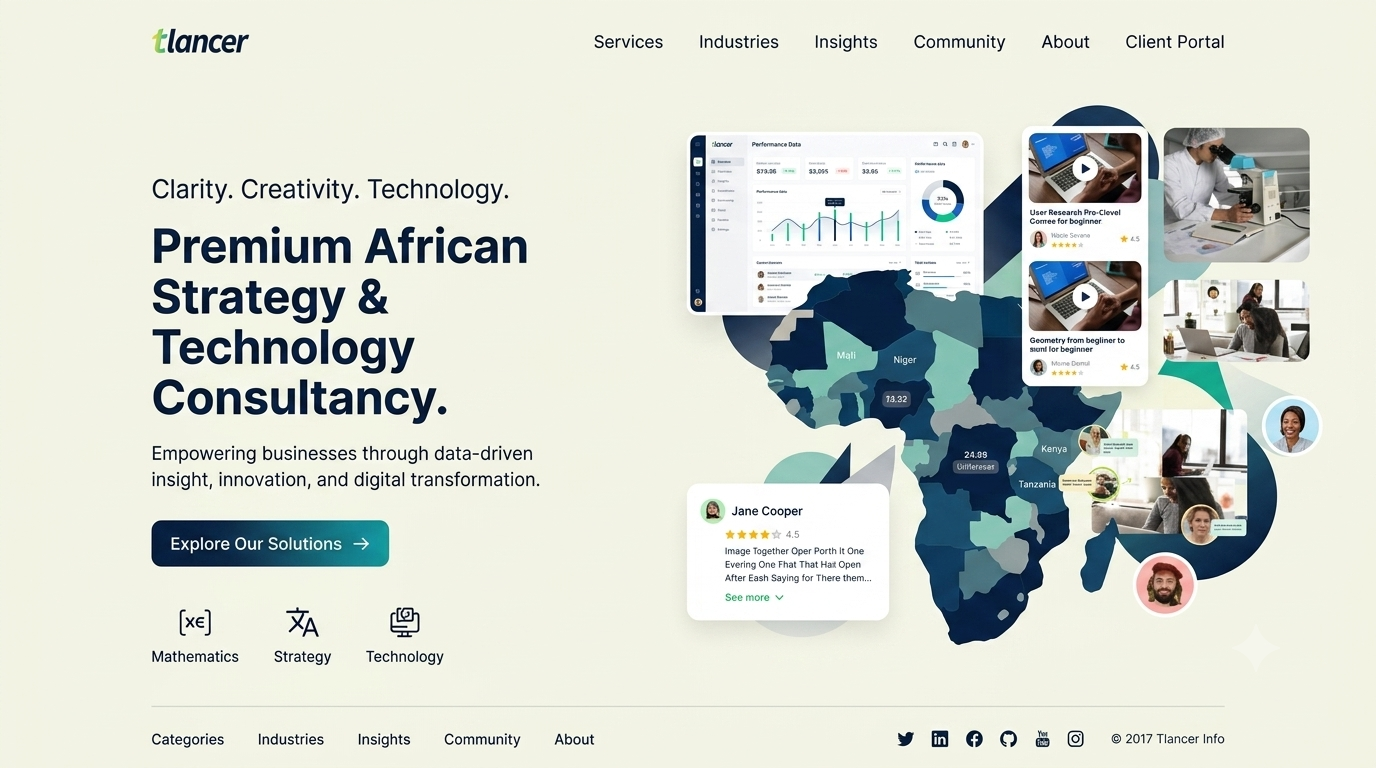
Leading design from zero to an investor-ready MVP for a marketplace connecting learners with world-class tutors — across course discovery, tutor onboarding, and the student learning experience.
Tlancer set out to solve a simple problem: finding a good tutor for a specific skill — Adobe XD, Python, data analytics, languages — shouldn't mean scrolling through unrelated course platforms or relying on word-of-mouth. I joined as Product Designer II and led design through the full arc from an early concept to a working, investor-ready MVP.
My scope covered information architecture, wireframing, high-fidelity UI, and design-to-development handoff, alongside heading product validation with early users to make sure what shipped actually matched how people search for and book learning.
Building an MVP for a two-sided marketplace means designing for two audiences with opposite motivations at the same time — before there's a userbase to test either one against.
Because this was a pre-launch MVP, the priority was designing something that could be tested and validated with real early users quickly — not a fully-featured platform on day one.
The homepage anchors the whole experience: a clear search entry point, category-based discovery, and course cards designed to build trust at a glance — rating, tutor name, and price all visible before a click.
HOMEPAGE — HERO, SEARCH & TRUSTED-BY LOGOS

POPULAR COURSES — CATEGORY DISCOVERY CARDS

NEW COURSES — MARKETPLACE LISTING WITH RATINGS & PRICING

TUTOR ONBOARDING — "BECOME A TUTOR" CONVERSION SECTION
The final MVP gives students a fast route from browsing to enrolling, and gives tutors a straightforward reason and path to list their own courses — with the homepage doing the work of building trust for both.
Beyond the screens themselves, this role meant owning product validation and the design-to-dev handoff — making sure the MVP that reached engineering had already been pressure-tested against real early users, not just internal assumptions.
Designing a two-sided marketplace MVP means every screen has to earn trust for someone who has never used the platform before — on both sides at once. The biggest lesson was resisting the urge to over-build before validating that students and tutors would actually behave the way the flows assumed.